I unfortunately tend to be generally apathetic on issues such as censorship and freedom of speech, simply because it seems so unsolvable to me. The benefits of censorship to those censoring are a sense of order and "healthy" limitations (by their own standards), which I can understand and relate to. However, I can also relate to those being unfairly censored. It doesn't seem right that ideas can't be thrown around, when ideas is what promotes progress - especially in the academic setting. Thus, I don't think that censorship in itself is a problem. I think the situations in which censorship is applied is when problems arise. Who gets to do it, and what is the premise? Should we hang on to freedom of speech in all circumstances in order to preserve the right; are we eating away at that right slowly through the use of censorship? Where is the line?
There have been two instances in my stay at Lipscomb when I have encountered unfair censorship. One being an article a friend of mine wrote for the Babbler about a new church our Campus Minister has started. She was so passionate about the subject and spent a great deal of time on the article only to be told that it would not be published because the church did not abide by "traditional Church of Christ doctrine" (although the church is a Church of Christ). Secondly, another instance was with the literary and arts journal Lipscomb used to publish called Exordium. Last year after submissions were in and the journal was ready for print, the university censored out the majority of the contents on flimsy grounds and the journal was left with naked pages and was not printed until the students raised enough money to unaffiliate it with Lipscomb. It still remains that way this year.
Areopagitica brought to mind so many issues that are still so prevalent today, and it's frustrating that we still haven't come to a decision on the matter. Obviously, opinions will always differ and a "decision" will never be made... but it is interesting to read a take on the issue from a historically different standpoint.
One last note - I think it's interesting that we have a "Fighting Words" doctrine (you can be arrested simply for saying offensive or lude things to police officers, basically) in the US, but we fight so strongly for our right to free speech. I understand the premise for the fighting words law, but it seems that if our constitution wants to provide protection for the right to free speech in ALL circumstances, that this law would directly contradict that. But on the contrary, the Supreme Court has upheld the fighting words doctrine since its existance from the Chaplinsky v. New Hampshire case. And here we come full circle: If you want free speech, it's all or nothing. Otherwise, where does the censorship end? When is it right and when is it wrong? Who gets to decide what gets censored?
I'm telling you: unsolvable.
http://www.freedomforum.org/templates/document.asp?documentID=13718
Thursday, February 26, 2009

Freedom of Speech on Campuses
The issue of freedom of speech is an eternal one. Censorship occurred in ancient Greece, 1644, and today around the world. The underlying issue behind censorship is the question of who gets to be the judge of what’s allowable and what’s not? And why are we not given the choice to decide what’s morally right and what’s not? No one is incorruptible, and everyone has differing opinions of what crosses the line and what just toes the line.
The fact that Lipscomb uses a filter for the internet, and most likely censures many of its articles submitted for posting in The Babbler made me think about what other university campuses do to suppress the freedom of speech. One such article I discovered addressed the issue in a straightforward manner: “Free speech at public universities and colleges is at once the most obvious and the most paradoxical of constitutional principles.”
Students are here to get an education, to think freely and to question all. But to repress the freedom of expression is to make us into “backward scholars,” as Milton so eloquently put it. God left us the freedom of choice, and we should be allowed to choose what is right and wrong, even when presented with not so “good” material. Perhaps my favorite quote in all of Areopagitica is this: “They are not skilful considerers of human things, who imagine to remove sin by removing the matter of sin; for, besides that it is a huge heap increasing under the very act of diminishing.” By not allowing us to access or view certain materials or topics, it only encourages us to be ingenious in the way we search for it and feeds the curiosity behind it.
One university, I found, even banned the freedom of speech. In order to submit anything for print, a student would have to submit a request weeks beforehand. Universities may think they are protecting us, but the reality is, we are ADULTS and how does being on a university campus change that fact? We have adult minds, and by stifling us and treating us like children, universities are doing nothing but the opposite of what they are intended for: the repression of education.
“For opinion in good men is but knowledge in the making.”
Articles I mentioned:
http://www.petesodyssey.org/node/173
http://www.firstamendmentcenter.org/speech/pubcollege/overview.aspx
The fact that Lipscomb uses a filter for the internet, and most likely censures many of its articles submitted for posting in The Babbler made me think about what other university campuses do to suppress the freedom of speech. One such article I discovered addressed the issue in a straightforward manner: “Free speech at public universities and colleges is at once the most obvious and the most paradoxical of constitutional principles.”
Students are here to get an education, to think freely and to question all. But to repress the freedom of expression is to make us into “backward scholars,” as Milton so eloquently put it. God left us the freedom of choice, and we should be allowed to choose what is right and wrong, even when presented with not so “good” material. Perhaps my favorite quote in all of Areopagitica is this: “They are not skilful considerers of human things, who imagine to remove sin by removing the matter of sin; for, besides that it is a huge heap increasing under the very act of diminishing.” By not allowing us to access or view certain materials or topics, it only encourages us to be ingenious in the way we search for it and feeds the curiosity behind it.
One university, I found, even banned the freedom of speech. In order to submit anything for print, a student would have to submit a request weeks beforehand. Universities may think they are protecting us, but the reality is, we are ADULTS and how does being on a university campus change that fact? We have adult minds, and by stifling us and treating us like children, universities are doing nothing but the opposite of what they are intended for: the repression of education.
“For opinion in good men is but knowledge in the making.”
Articles I mentioned:
http://www.petesodyssey.org/node/173
http://www.firstamendmentcenter.org/speech/pubcollege/overview.aspx
The Limits of Freedom?
Freedom is one of the keys to American life, but it obviously must come with some sort of restraint(s). Complete freedom is anarchy, and as with anything else, too much of a good thing can quickly turn sour. Therein lies the question: Where should the line be drawn with respect to freedom? One of the issues at hand in Areopagitica is freedom of speech, but to evaluate this we must first answer the question of how much freedom (in general) is too much. Logically, one should be free to do his will unless it disturbs the safety, dignity, freedom etc. of others. With respect to speech, this line has been blurred. Libel and slander are common, even in publications of national impact. The information provided by media outlets is so thoroughly, even intentionally, biased that to read find true unadulterated news, one must interpret as if reading a foreign language. However, we may someday long for this to return.
The most recent and most pressing freedom of speech issue is that of FCC regulations on political television and talk radio shows. President Obama has at least entertained the idea of enforcing the antiquated "Fairness Doctrine" that requires radio shows to devote equal attention to both sides of an argument. This may appear at first glance to be helpful, but let's look at the underwater portion of this iceberg. This would quickly create a Big Brother-esque intimidating air about the media, which would carefully construct politically correct shows to avoid removal from the air. There is even talk of this policy being expanded: The number of liberally biased shows must be equal to the number of conservatively biased ones. What happens if you are an "extra" show for one side or the other? Bye. What if your show fails to provide the specific amount of bias required? Bye. So much for freedom of speech.
http://www.washingtontimes.com/news/2008/nov/28/first-media-bias/
http://www.washingtontimes.com/news/2009/feb/24/fairness-doctrine-fog/
The most recent and most pressing freedom of speech issue is that of FCC regulations on political television and talk radio shows. President Obama has at least entertained the idea of enforcing the antiquated "Fairness Doctrine" that requires radio shows to devote equal attention to both sides of an argument. This may appear at first glance to be helpful, but let's look at the underwater portion of this iceberg. This would quickly create a Big Brother-esque intimidating air about the media, which would carefully construct politically correct shows to avoid removal from the air. There is even talk of this policy being expanded: The number of liberally biased shows must be equal to the number of conservatively biased ones. What happens if you are an "extra" show for one side or the other? Bye. What if your show fails to provide the specific amount of bias required? Bye. So much for freedom of speech.
http://www.washingtontimes.com/news/2008/nov/28/first-media-bias/
http://www.washingtontimes.com/news/2009/feb/24/fairness-doctrine-fog/
Questionable Media
At first glance of Milton’s “Aeropagitica” I felt a little dizzy. But, like Jenni, I copied and pasted “Aeropagitica” into a Word document for easier reading and note-taking and this proved to be very helpful. While reading “Aeropagitica,” I could see many similarities between 1644 and 2009. The same issues are still present. How much control should government have over censoring? Should there be complete and total freedom of speech? Is libel and slander included in your Constitutional rights? The jist of it is, is where is the line drawn when dealing with freedom of speech?
One problem I see with government censoring media, such as; television, movies, radio, newspapers, or the internet is there is so much out there that would have to be screened. I think that this is just a waste of time and energy. The government should spend their efforts on something more worthwhile and leave the censoring up to the parents and authorities of children.
Sin will always be present whether or not we have questionable media. As Milton said, “evil manners are as perfectly learnt without books a thousand other ways which cannot be stopped.”
Those who want to be good will choose to be good whether or not the media around them is bad. Those people would believe, “we must not expose ourselves to temptations without necessity, and next to that, not employ our time in vain things.”
With the growing number of accessibility to internet sites and other types of media, how can we as Christians keep ourselves looking for the good media?
This YouTube video explains another great subject. . .the topic of religion in schools.
http://www.youtube.com/watch?v=DsuvjEW4UAY
I think it's crazy how the government can try to take God and Jesus out of our everyday lives and allow other malicious works into elementary schools. I don't think the government can make a decision for everyone in the country because there are so many different viewpoints. Can the government put trust in local authorities to make judgements about taboo media? How else could this problem be addressed?
One problem I see with government censoring media, such as; television, movies, radio, newspapers, or the internet is there is so much out there that would have to be screened. I think that this is just a waste of time and energy. The government should spend their efforts on something more worthwhile and leave the censoring up to the parents and authorities of children.
Sin will always be present whether or not we have questionable media. As Milton said, “evil manners are as perfectly learnt without books a thousand other ways which cannot be stopped.”
Those who want to be good will choose to be good whether or not the media around them is bad. Those people would believe, “we must not expose ourselves to temptations without necessity, and next to that, not employ our time in vain things.”
With the growing number of accessibility to internet sites and other types of media, how can we as Christians keep ourselves looking for the good media?
This YouTube video explains another great subject. . .the topic of religion in schools.
http://www.youtube.com/watch?v=DsuvjEW4UAY
I think it's crazy how the government can try to take God and Jesus out of our everyday lives and allow other malicious works into elementary schools. I don't think the government can make a decision for everyone in the country because there are so many different viewpoints. Can the government put trust in local authorities to make judgements about taboo media? How else could this problem be addressed?
Wednesday, February 25, 2009
censorship vs. freedom of speech
Once I had plowed my way through the forty some odd pages in Milton's Areopagitica saved in my Word document, things were beginning to make some sense. The basic idea he was getting at was that no one man should ever be allowed to decide for the public what they can and cannot see or hear. Not to say that people who take risks in the media or the press aren't subject to scrutiny or even the law. It's just that on the front end, everyone should have the freedom to choose for themselves what to expose themselves to, just as those putting the information out their have freedom of speech and of the press. As he's beginning to wrap up, Milton says this on the matter:
"And as for regulating the press, let no man think to have the honour of advising ye better than yourselves have done in that order published next before this, 'that no book be printed, unless the printer's and the author's name, or at least the printer's, be registered.' "
Here he even suggests that due credit be given, but that no control be executed to keep information from certain groups or what have you. He thinks as I do that no man has that much authority over another that they can dictate what should or should not be viewed, heard or experienced. He goes on, as he concludes to point a finger at the government who are the first to cover their tracks. This is the case for any body, company, or organization that rules over another. Milton says this:
"This I know, that errors in a good government and in a bad are equally almost incident; for what magistrate may not be misinformed, and much the sooner, if liberty of printing be reduced to the power of a few?"
Here he's trying to get across even further that even in the case of the government, censorship shouldn't be tolerated, allowing a few to make the choice for the whole. A good example of this and how it applies today can be found in a re-airing of an episode of Saturday Night Live. It originally aired last March containing a biting skit that directly poked fun at the corporate ownership of TV networks. The bit is modeled after Schoolhouse Rock and its song lyrics are anything but child-like with phrases like:
"It's a media-opoly. A media-opoly The whole media's controlled by a few corporations Thanks to deregulation by the FCC"
"They can give you lots of cancer That can hurt your body But on network TV You'll rarely hear anything bad about the nuclear industry Like when Westinghouse was sued for fraud? Which time? When GE made defective bolts it was an unreported crime Or when it was boycotted for operating nuclear bomb plants just to squeeze a dime..."
"I hear GE made the bullets that shot JFK"
So it's no shock that when this whole episode re-aired in June, this cute little skit was mysteriously cut from the show, end of story. This is a prime example of a corporate giant censoring a skit that implies they control the media...I don't think Milton would like this sort of behavior, no matter what level it's on.
here's the link to the article about it. I'd include the link to the video of the skit, but would you believe I couldn't find it?
http://find.galegroup.com.candycorn.lipscomb.edu/ips/retrieve.do?contentSet=IAC-Documents&resultListType=RESULT_LIST&qrySerId=Locale%28en%2C%2C%29%3AFQE%3D%28ke%2CNone%2C19%29censoring+the+media%24&sgHitCountType=None&inPS=true&sort=DateDescend&searchType=BasicSearchForm&tabID=T003&prodId=IPS&searchId=R1¤tPosition=5&userGroupName=tel_a_beaman&docId=A20913887&docType=IAC&contentSet=IAC-Documents
Tuesday, February 24, 2009
To Close One Gate, While the Rest Are Wide Open
As I sat at my computer reading
For if they fell upon one kind of strictness, unless their care were equal to regulate all other things of like aptness to corrupt the mind, that single endeavour they knew would be but a fond labour: to shut and fortify one gate against corruption, and be necessitated to leave others round about wide open.
I am writing something that in a few minutes will be available for anyone with internet access to read. How do we limit what is posted on the internet? Should the government monitor every site and every bit of information? We all know that the internet can be a good thing as well as a bad thing, so should the bad things simply be deleted or prohibited? As
In 1998, a law was passed called the Child Online Protective Act (COPA). This law made making any communication for commercial purposes that could be considered harmful to minors a crime, unless there was a legitimate business reason to communicate. The penalty for violating this law was up to $50,000 a day. Immediately after it was passed, the law was contested on grounds of violating the First Amendment. The law never went into effect, and ten years after being passed was finally declared unconstitutional. There are still debates about whether the internet should have certain standards and censors, and it is obviously a difficult question to answer since it took 10 years to settle the constitutionality of this one law.
Since the internet is a fairly new invention, it is still continually changing and progressing. Just as
Where there is much desire to learn, there of necessity will be much arguing, much writing, many opinions; for opinion in good men is but knowledge in the making.
Wednesday, February 18, 2009
What are we doing...
Reading the article "Why the Devil Takes Visa" made me think about what exactly Americans are doing with the money we have. The amount of money we spend on needless things is astonishing. Credit cards have only added to this problem by allowing people to spend money they don't even have. What if we spent they money in ways that benefit others instead of ourselves?
Here are some statistics that bring this problem to light:
Top 5 Alarming World Poverty Statistics:
5. More than 800 million people suffer from malnutrition.
4. The United States spends 0.16% of its budget on aid to poor countries, the second lowest percentage among all developed countries.
3. A worker in Bangladesh making garments for Disney would have to work 210 years in order to earn what Disney’s CEO gets paid in one hour.
2. 35,000 children a day die from diseases related to malnutrition, or 1 every 2 seconds.
1. Over three billion people (roughly half the world’s population) live on less than two dollars a day.
Other Random Statistics
Only 15% of Americans report that they would be satisfied with a comfortable middle-class lifestyle.
The average American consumes 5 times more than a Mexican, 10 times more than a Chinese person, and 30 times more than someone from India.
Think about these statistics along with the quote from the original text:
"Never turn away the needy; share all your possessions with your brother, and do not claim that anything is your own. If you and he are joint participators in things immortal, how much more so in things that are mortal?"
Is it up to America give to other countries? And is there a way to do that while also giving them the opportunity to be prosperous on their own? I wonder what would happen if Lipscomb students were told they had to live on $2 a day. True a good number of us will spend a week to ten days "being Jesus" to impoverished people and serving them and seeing how they live. But after that short time we will come back to the comforts of our lives here and rarely think about what it would be like to live like those people live. I don't want to take anything away from all the good that will be done over Spring Break but how much more could we do if we stopped spending on the stuff that we don't need.
Why have we become so accustomed to spending so much money on needless things when there are millions of people going without the daily necessities? And what are we going to go now, where do we go from here in order to change those statistics? We would have to stop focusing on ourselves our greed and focus on others who have needs we cannot even imagine.
http://disciplineforjustice.blogspot.com/2007/04/wake-up-and-smell-numbers.html
Here are some statistics that bring this problem to light:
Top 5 Alarming World Poverty Statistics:
5. More than 800 million people suffer from malnutrition.
4. The United States spends 0.16% of its budget on aid to poor countries, the second lowest percentage among all developed countries.
3. A worker in Bangladesh making garments for Disney would have to work 210 years in order to earn what Disney’s CEO gets paid in one hour.
2. 35,000 children a day die from diseases related to malnutrition, or 1 every 2 seconds.
1. Over three billion people (roughly half the world’s population) live on less than two dollars a day.
Other Random Statistics
Only 15% of Americans report that they would be satisfied with a comfortable middle-class lifestyle.
The average American consumes 5 times more than a Mexican, 10 times more than a Chinese person, and 30 times more than someone from India.
Think about these statistics along with the quote from the original text:
"Never turn away the needy; share all your possessions with your brother, and do not claim that anything is your own. If you and he are joint participators in things immortal, how much more so in things that are mortal?"
Is it up to America give to other countries? And is there a way to do that while also giving them the opportunity to be prosperous on their own? I wonder what would happen if Lipscomb students were told they had to live on $2 a day. True a good number of us will spend a week to ten days "being Jesus" to impoverished people and serving them and seeing how they live. But after that short time we will come back to the comforts of our lives here and rarely think about what it would be like to live like those people live. I don't want to take anything away from all the good that will be done over Spring Break but how much more could we do if we stopped spending on the stuff that we don't need.
Why have we become so accustomed to spending so much money on needless things when there are millions of people going without the daily necessities? And what are we going to go now, where do we go from here in order to change those statistics? We would have to stop focusing on ourselves our greed and focus on others who have needs we cannot even imagine.
http://disciplineforjustice.blogspot.com/2007/04/wake-up-and-smell-numbers.html
Christianity and Consumerism
The world today seems to be run by the need to consume. Advertisements permeate our lives trying to convince people that they need the latest gadgets that everyone else has. With this lifestyle surrounding us, it is easy to get caught up in the world. As Rodney Clapp said in his article, "Why the Devil takes VISA," the consumer ethos is of individual self fulfillment. We have been conditioned to think about ourselves first and worry about getting what we want. Christians, however, are called to live their lives above the world and keep their focus on God.
I think people often confuse consumerism and wealth. Plenty of people are rich but resist becoming enveloped in their material possessions. Others are more radical and give up all their possessions in an attempt to simplify their lives and focus on God. The Bruderholf, a group of eight communities, gave up everything they had in response to consumer capitalism. I think doing something like this would be a great experience, but I do not believe it is necessary to be a "good" Christian. Even someone very wealthy can resist being caught in our capitalistic society; it just depends on where there heart is. In fact, if this wealthy person's intentions are to serve God, they can actually help out a lot of people. My friend Liz and her family have been very blessed monetarily and have a huge beautiful home. Some people say that Liz does not need a house that large but her house is always filled with teens from the youth group, women for baby showers, or men for devotionals. I don't think it matters whether you are rich or have virtually no possessions, as long as you are focused on God and not material things.
One way, I believe, for Christians to live above consumerism is to be content with what God gives us. So many people try to climb the "ladder of success" in the search for happiness, but are disappointed because they are not fulfilled. Many others turn to possessions thinking that if they just had the latest phone or the fastest car they would find joy. They too are unfulfilled because they are longing for products and not for God. We must be careful not to place the items we want or the items we have before God because then they are nothing but idols.
Consumer culture constantly leaves people dissatisfied. Instead of dwelling on what we want, we should:
1- Focus on the blessings God has provided,
2- Step back from the world and its constant advertising, and
3- Take a walk or just sit outside and enjoy what God has created.
http://www.theadcompany.com.au/2006/web/creative/articles/Consumerism_and_marketing.pdf
http://www.gotquestions.org/materialism-Christian.html
I think people often confuse consumerism and wealth. Plenty of people are rich but resist becoming enveloped in their material possessions. Others are more radical and give up all their possessions in an attempt to simplify their lives and focus on God. The Bruderholf, a group of eight communities, gave up everything they had in response to consumer capitalism. I think doing something like this would be a great experience, but I do not believe it is necessary to be a "good" Christian. Even someone very wealthy can resist being caught in our capitalistic society; it just depends on where there heart is. In fact, if this wealthy person's intentions are to serve God, they can actually help out a lot of people. My friend Liz and her family have been very blessed monetarily and have a huge beautiful home. Some people say that Liz does not need a house that large but her house is always filled with teens from the youth group, women for baby showers, or men for devotionals. I don't think it matters whether you are rich or have virtually no possessions, as long as you are focused on God and not material things.
One way, I believe, for Christians to live above consumerism is to be content with what God gives us. So many people try to climb the "ladder of success" in the search for happiness, but are disappointed because they are not fulfilled. Many others turn to possessions thinking that if they just had the latest phone or the fastest car they would find joy. They too are unfulfilled because they are longing for products and not for God. We must be careful not to place the items we want or the items we have before God because then they are nothing but idols.
Consumer culture constantly leaves people dissatisfied. Instead of dwelling on what we want, we should:
1- Focus on the blessings God has provided,
2- Step back from the world and its constant advertising, and
3- Take a walk or just sit outside and enjoy what God has created.
http://www.theadcompany.com.au/2006/web/creative/articles/Consumerism_and_marketing.pdf
http://www.gotquestions.org/materialism-Christian.html
Monday, February 16, 2009
"plop, plop, fizz, fizz, oh, what a relief it is!",
After reading "Why the Devil takes VISA," I started thinking about how HUGE advertising is in the consumerists world. Clapp tells how about a group of Christian college kids were separated by nations and asked to pick a song representing their culture. Most of the nationalities represented choose folk songs from native lands within a short amount of time, but not only do the Americans take twice as long to decide--they choose the coca-cola jingle "I'd like to teach the world to sing."
Off and on throughout the article various forms of advertising were mention in how they are gradually taking over our lives. Think about it...we have billboards, radios, TVs, magazines, and newspapers--all FULL of different ads beckoning us to do who knows what. Ads are becoming more and more common. When TVs first came out ads were shown occasionally and usually just for show sponsors. Now, it seems as though some channels show more commercials than actual show. Did you know that there are possibilities for having more channels be strictly commercials and no shows?
What gets me is we buy things we don't want or need just because it "sounds cool" or the jingle gets stuck in our head. We can be doing everyday activities then...BAM!!!! We get hit with a random jingle that will haunt us for days, but you know what? It did it's job...you won't stop thinking about it and more than likely you will buy that product. Even if not immediately, eventually we buy the products we've heard the most about or that sticks in our minds the most.
If you think I'm being extreme, look at the list below and tell me you don't know what half these slogans are for:
plop, plop, fizz, fizz, oh, what a relief it is...
give me a break. give me a break. break me off a piece of that...
my bologna has a first name...
snap, crackle, and pop
they're ggrrrrreat!!!
i'm lovin' it!
I know some of these are old...but you knew what they were talking about didn't you? Have fun with ads but read/listen to them at your own risk...they are out to get you.
http://www.helium.com/items/848401-commercial-jingles-that-stand-the-test-of-time
http://money.howstuffworks.com/commercial-jingle.htm
Off and on throughout the article various forms of advertising were mention in how they are gradually taking over our lives. Think about it...we have billboards, radios, TVs, magazines, and newspapers--all FULL of different ads beckoning us to do who knows what. Ads are becoming more and more common. When TVs first came out ads were shown occasionally and usually just for show sponsors. Now, it seems as though some channels show more commercials than actual show. Did you know that there are possibilities for having more channels be strictly commercials and no shows?
What gets me is we buy things we don't want or need just because it "sounds cool" or the jingle gets stuck in our head. We can be doing everyday activities then...BAM!!!! We get hit with a random jingle that will haunt us for days, but you know what? It did it's job...you won't stop thinking about it and more than likely you will buy that product. Even if not immediately, eventually we buy the products we've heard the most about or that sticks in our minds the most.
If you think I'm being extreme, look at the list below and tell me you don't know what half these slogans are for:
plop, plop, fizz, fizz, oh, what a relief it is...
give me a break. give me a break. break me off a piece of that...
my bologna has a first name...
snap, crackle, and pop
they're ggrrrrreat!!!
i'm lovin' it!
I know some of these are old...but you knew what they were talking about didn't you? Have fun with ads but read/listen to them at your own risk...they are out to get you.
http://www.helium.com/items/848401-commercial-jingles-that-stand-the-test-of-time
http://money.howstuffworks.com/commercial-jingle.htm
Sunday, February 15, 2009
Women's Role in the Church: Shave Their Heads
This post is somewhat of a continuation of what Sydney posted earlier. I have contemplated what she said quite a bit and want to keep this chain of commentary going. This subject is actually quite like the subjects of the articles we read, because I feel that one of the biggest struggles in religion is finding that line between what is God’s will and what is societal, and where and how and why and when society becomes more powerful than God in our lives. I feel that in every subject—be it marketing Jesus, or loosing principles to consumerism and capitalism, or my subject, women’s role in the church—we have to figure out the core of what God wants, and ask ourselves if it is more important that we follow a checklist or if we actually follow His will with our hearts.
Ok here is what I have been thinking for a while—just my thoughts mind you. Ever since I read Sydney’s blog on women’s role in the church today, I keep thinking that at the time of writing of the verses on women keeping silent in the church, women pretty much kept silent everywhere else too. A grandmother was generally honored less than a son, unless she was very lucky to have been blessed with a good family. A normal woman had no rights in ancient society unless she had a husband, and no rights at all if he left her or decided to beat her every day were he so inclined. As much as we may not like to admit our "barbaric" roots, this was still what was the societal norm in the time of Christ. (And may I mention did not change until only within the last couple of centuries, and still remains the same in much of the world.) With this point in mind, that women were treated as describe above and expected to accept their role in society, it seems ridiculous to me to think that Christianity could have possibly been a viable religion with women as its head leaders in ancient times. Let me use a crude example from our not so distant past—what if slaves were the heads of Christianity in America during the pre-civil war times? It simply would not have worked to further Christianity in the world as a whole.
This is my opinion: Paul forbade women to take on active vocal roles in the leadership of worship in the early church in order to "keep the peace" between Christianity and the society it was set in. Thus I believe this law is societal in nature.
If you have an issue with saying that this forbidding of women's activity in worship is societal, then let us ignore it. Lets embrace all directions of the New Testament, and try to do worship and behave exactly as the first century Christians were instructed to. We would be prophesying and speaking in tongues, not to mention selling everything that we own in order to form communes. By Paul's instructions, it would be okay to own slaves as long as we treated them well (which likely means giving them at least one meal a day and the opportunity to buy their freedom when they are too old to work anymore). We would also make our women cover their head during worship, and if they do not then we would shave all of their heads (see 1 Cor. 11:3-10). We should also require that men uncover their heads during prayer and prophesy, and have short hair, and count it to them as sin if they do not follow this direct instruction from God's ordained writer Paul. Do you know why this is likely something that you have either never heard of or heard preached on? Because long ago, in a century far far away, a group of "righteous" male leaders decided that this rule, so bluntly stated in the instpired word of God, is based on a society that they were not a part of –and thus it did not apply to Christians anymore. This whole societal-based interpretation is something that is not new—it is accepted and widespread.
All of these examples are in the Bible, believe it or not—and it seems very hypocritical to claim that we as the Church of Christ "are just trying to do church like the first century Christians did church", if we are not set on following every single guideline and example of behavior to the T—that means including absolutely everything.
Let me ask you: Is it okay to have slaves today? Paul obviously is okay with it, thus it is not sin to force another soul to do your bidding for their entire lives without the ability to choose if they want to. Is it a sin for a woman to pray with her head uncovered? In Paul's eyes, I would say that if she did that she would be going against his teaching, and thus guilty of sin—as would the man who prayed with his hat on or dreadlocks flowing—which would likely need to be repented of and confessed. Read your Bible—this is what is in it.
So I have to ask myself—since in our world today it is obviously accepted as a sin to have a slave and not a sin for a woman to have a bare-head in prayer—why is it that in this same world a woman can be president but she cannot teach or preach or lead singing or pray or serve communion or even ask questions in worship? If you can give me a straight faced, no-bull answer that is not based on the way your grandparents did church or some societal brainwashing scheme, I would love to hear it.
Ok here is what I have been thinking for a while—just my thoughts mind you. Ever since I read Sydney’s blog on women’s role in the church today, I keep thinking that at the time of writing of the verses on women keeping silent in the church, women pretty much kept silent everywhere else too. A grandmother was generally honored less than a son, unless she was very lucky to have been blessed with a good family. A normal woman had no rights in ancient society unless she had a husband, and no rights at all if he left her or decided to beat her every day were he so inclined. As much as we may not like to admit our "barbaric" roots, this was still what was the societal norm in the time of Christ. (And may I mention did not change until only within the last couple of centuries, and still remains the same in much of the world.) With this point in mind, that women were treated as describe above and expected to accept their role in society, it seems ridiculous to me to think that Christianity could have possibly been a viable religion with women as its head leaders in ancient times. Let me use a crude example from our not so distant past—what if slaves were the heads of Christianity in America during the pre-civil war times? It simply would not have worked to further Christianity in the world as a whole.
This is my opinion: Paul forbade women to take on active vocal roles in the leadership of worship in the early church in order to "keep the peace" between Christianity and the society it was set in. Thus I believe this law is societal in nature.
If you have an issue with saying that this forbidding of women's activity in worship is societal, then let us ignore it. Lets embrace all directions of the New Testament, and try to do worship and behave exactly as the first century Christians were instructed to. We would be prophesying and speaking in tongues, not to mention selling everything that we own in order to form communes. By Paul's instructions, it would be okay to own slaves as long as we treated them well (which likely means giving them at least one meal a day and the opportunity to buy their freedom when they are too old to work anymore). We would also make our women cover their head during worship, and if they do not then we would shave all of their heads (see 1 Cor. 11:3-10). We should also require that men uncover their heads during prayer and prophesy, and have short hair, and count it to them as sin if they do not follow this direct instruction from God's ordained writer Paul. Do you know why this is likely something that you have either never heard of or heard preached on? Because long ago, in a century far far away, a group of "righteous" male leaders decided that this rule, so bluntly stated in the instpired word of God, is based on a society that they were not a part of –and thus it did not apply to Christians anymore. This whole societal-based interpretation is something that is not new—it is accepted and widespread.
All of these examples are in the Bible, believe it or not—and it seems very hypocritical to claim that we as the Church of Christ "are just trying to do church like the first century Christians did church", if we are not set on following every single guideline and example of behavior to the T—that means including absolutely everything.
Let me ask you: Is it okay to have slaves today? Paul obviously is okay with it, thus it is not sin to force another soul to do your bidding for their entire lives without the ability to choose if they want to. Is it a sin for a woman to pray with her head uncovered? In Paul's eyes, I would say that if she did that she would be going against his teaching, and thus guilty of sin—as would the man who prayed with his hat on or dreadlocks flowing—which would likely need to be repented of and confessed. Read your Bible—this is what is in it.
So I have to ask myself—since in our world today it is obviously accepted as a sin to have a slave and not a sin for a woman to have a bare-head in prayer—why is it that in this same world a woman can be president but she cannot teach or preach or lead singing or pray or serve communion or even ask questions in worship? If you can give me a straight faced, no-bull answer that is not based on the way your grandparents did church or some societal brainwashing scheme, I would love to hear it.
Do Christianity and Shopping Go Together?
One of the many ideas in this article that struck me as interesting is the fact that Christians were a large part of the twentieth-century consumer culture. I was surprised to learn that Asa G. Candler, the Coca-Cola owner, and John Wanamaker, the founder of the Wanamaker department-store, were such so dedicated having Christian influences in their advertising.
I was even more surprised to realize that people still do this today. The girls in this class might have noticed that the clothing store Forever 21 has John 3:16 written on the bottom of all their shopping bags. The famous fast food restaurant in California, In-and-Out Burger, also puts John 3:16 on the bottom of their Styrofoam cups. Then there are the hundreds of t-shirts that take a well-known advertising logo and turn it into a message of faith. http://www.christiantshirtshop.com/
The question for me, though, is how helpful these advertising methods are. I immediately thought it was neat idea to put scriptures on the bottom of products, but then I researched and saw that these products do get negative feedback. Apparently, people do not like the fact that the companies assume they are Christian or want to be a Christian. One article did not like the choice of scripture since it “not so subtlety says whoever doesn't believe in Jesus is going straight to hell.”
There are people that like the idea of a company being personable and not a cold money-making machine, but others don’t like the idea of going to eat and getting preached at. So, are these marketing techniques helpful or hurtful to religion? Should we even be connecting consumerism to religion? If we follow the examples in the Bible, we can’t let some negative criticism stop us from spreading the Word. However, maybe the more traditional methods of “marketing” Jesus are better than these modern ones that create enemies or even make religion more of a fashion statement than a way of life.
http://www.corpwatch.org/article.php?id=13955
http://www.denverpost.com/ci_5902652?source=rss
http://www.nytimes.com/2005/03/29/fashion/29dres.html?pagewanted=2&_r=1&sq=faith%20shirts&st=cse&scp=5
I was even more surprised to realize that people still do this today. The girls in this class might have noticed that the clothing store Forever 21 has John 3:16 written on the bottom of all their shopping bags. The famous fast food restaurant in California, In-and-Out Burger, also puts John 3:16 on the bottom of their Styrofoam cups. Then there are the hundreds of t-shirts that take a well-known advertising logo and turn it into a message of faith. http://www.christiantshirtshop.com/
The question for me, though, is how helpful these advertising methods are. I immediately thought it was neat idea to put scriptures on the bottom of products, but then I researched and saw that these products do get negative feedback. Apparently, people do not like the fact that the companies assume they are Christian or want to be a Christian. One article did not like the choice of scripture since it “not so subtlety says whoever doesn't believe in Jesus is going straight to hell.”
There are people that like the idea of a company being personable and not a cold money-making machine, but others don’t like the idea of going to eat and getting preached at. So, are these marketing techniques helpful or hurtful to religion? Should we even be connecting consumerism to religion? If we follow the examples in the Bible, we can’t let some negative criticism stop us from spreading the Word. However, maybe the more traditional methods of “marketing” Jesus are better than these modern ones that create enemies or even make religion more of a fashion statement than a way of life.
http://www.corpwatch.org/article.php?id=13955
http://www.denverpost.com/ci_5902652?source=rss
http://www.nytimes.com/2005/03/29/fashion/29dres.html?pagewanted=2&_r=1&sq=faith%20shirts&st=cse&scp=5
Saturday, February 14, 2009
Experience Life At No Cost! Call 1-800-MEET-God
Today's culture has instilled in us the desire for instant gratification. We want what we want when we want it. We are losing the ability to delay pleasure for something much more gratifying down the road. What is the cause of this? Every day we are bombarded with advertisements that tell us what we "need." As Christians, we are supposed to rely solely on God and so advertisers have found a new way of marketing. If the mix Jesus into whatever they want to sell, they are able to tell us that by buying their product, we are in essence choosing God. We are, of course, to ignore the profit that they make from our "choice of God."
What does this mean for us? What does this mean for God? Christianity today had become so commercialized and watered down that a reading Bible verse on a bumper sticker is all it takes for salvation. How insulting is that!? Jesus has been paraphrased and summarized to the point where a one liner such as "Experience Life At No Cost! Call 1-800-MEET-God" is perfectly sufficient for sharing God with someone else. It even fits all of the criteria of today: quick, simple, and completely devoid of commitment, truth and responsibility.
The gospel itself has its own marketing strategy: "All authority in heaven and on earth has been given to me. Therefore go and make disciples of all nations, baptizing them in the name of the Father and of the Son and of the Holy Spirit, and teaching them to obey everything I have commanded you. And surely I am with you always, to the very end of the age." Matthew 28:18-20. That sounds good enough for me!
http://net-burst.net/quips/punchy.htm
www.ruighaver.net/bumperstickers/christian.htm
http://www.churchmarketingsucks.com/archives/2008/06/marketing_fear.html
What does this mean for us? What does this mean for God? Christianity today had become so commercialized and watered down that a reading Bible verse on a bumper sticker is all it takes for salvation. How insulting is that!? Jesus has been paraphrased and summarized to the point where a one liner such as "Experience Life At No Cost! Call 1-800-MEET-God" is perfectly sufficient for sharing God with someone else. It even fits all of the criteria of today: quick, simple, and completely devoid of commitment, truth and responsibility.
The gospel itself has its own marketing strategy: "All authority in heaven and on earth has been given to me. Therefore go and make disciples of all nations, baptizing them in the name of the Father and of the Son and of the Holy Spirit, and teaching them to obey everything I have commanded you. And surely I am with you always, to the very end of the age." Matthew 28:18-20. That sounds good enough for me!
http://net-burst.net/quips/punchy.htm
www.ruighaver.net/bumperstickers/christian.htm
http://www.churchmarketingsucks.com/archives/2008/06/marketing_fear.html
Wednesday, February 11, 2009
The Lazy Generation
The underlying problem with our generation is not the internet. Our problem is the M.O. that the easiest way is the best way. We have been spoiled to a point where we truly believe that not only are we the most important people on earth, but we deserve to get whatever we want... whenever we want it. In school, cheating is assumed. The weirdos are the kids who are unwilling to make cheat sheets and refuse to let others copy off of their tests. Outside of school, work is also a no-no. According to familyeducation.com, the average young person watches 5 hours of TV per day, 7 days a week. Where do we expect these children's lives to go? If unrestrained, an alarming number of teenagers will spend literally every free moment either staring at some sort of electronic screen or sleeping. One of my teammates is literally a social outcast because he is so desperate to play video games. His grades are horrible and very few people know him well at all. When we were in the dorms over Christmas break, he would spend as many as 10 hours per day on his Xbox. According to a huffingtonpost.com survey, 97% of children play video games. It's amazing that they can squeeze in those games while still watching their 5 daily hours of TV. What alarms me the most about the pervasiveness of cheating is the reason behind it. These kids are not buying term papers off the internet because they are incapable of doing the work. The motivation is pure laziness. How can I get by while doing the least possible work? This is the dominant mindset of children today, and unless something is done, the future of our nation will be in jeopardy.
Monday, February 9, 2009
face-to-monitor-to-face communication
I think we can all agree there is obvious danger on the internet. Sexual predators, Nigerian-Princess scams, and pop-up ads lurk around every click of the mouse. Perhaps, more dangerously, is the internet addiction afflicting hundreds of thousands of people worldwide. As stated in the video and reiterated by Mackenzie, most tech-savvy schools conduct internet safety courses in order to protect children from those who would try and hurt them. What the video failed to depict was that it’s really the excess of internet usage that is the trouble. Teens that spend a vast majority of their waking hours online are far more likely to regard the internet as something innocuous.
The video, almost laughably, describes the internet phenomena as if it were some horrible pandemic of disease. Facebook and Myspace, when used appropriately, are excellent social networking tools, rather than some ailment found on "House". However, as explored in the video, discretion seems to be the element we as a demographic lack. I know several people personally that have been targeted by internet “creepers”, but their experience has been because of their own poor judgment rather than because they were sought out. It’s common sense that if someone asks you to take a picture of yourself topless and put it on the internet, you don’t do it. For as many examples of internet misuse that PBS was able to find, there are dozens more counter-examples that disprove their theories.
The internet is not a simple fad. It is used daily by millions worldwide, creating easy commerce and linking people around the globe. What bothers me most is that the internet (as well as cell phones and instant messenger) eliminates the necessity for face-to-face communication. Using this class blog as a standard method of communication makes me wonder if the science-fiction farces in the movies are really all that far off. If our reliance is based on a simple data-transfer system (punctuated by the occasional emoticon if we so choose), we lose the real meaning of relationships. Even the Pope has condemned overuse of these internet networking tools!
It’s sort of funny, really, how quickly we have embraced Facebook and Myspace. For example; in my high school, unless your relationship was “Facebook-Official”, it didn’t exist. If you weren’t friends with a person on the internet, you clearly didn’t socialize with him or her in real life. It seems ridiculous that an internet site would dictate so many social interactions. In a perfect world, everyone would get along in social situations. We wouldn’t be so distracted by our technology. Still, to be perfectly honest, I have Facebook open just behind this blog post. My cell phone is going off on the table right next to me. I’m sitting in the student center with about twenty other kids, all of whom are glued to their monitors. We're all in our separate little internet worlds, though I bet you anything half of them are Facebookchatting each other. I’ve got to take my idealism with a grain of salt, I suppose.
http://www.huffingtonpost.com/2009/01/23/pope-warns-against-obsess_n_160283.html
http://mashable.com/2006/08/25/facebook-profile/
plus, I thought this was funny;
http://www.bittertonic.com/daily-dose/395/i-can-be-your-facebook-stalker/
The video, almost laughably, describes the internet phenomena as if it were some horrible pandemic of disease. Facebook and Myspace, when used appropriately, are excellent social networking tools, rather than some ailment found on "House". However, as explored in the video, discretion seems to be the element we as a demographic lack. I know several people personally that have been targeted by internet “creepers”, but their experience has been because of their own poor judgment rather than because they were sought out. It’s common sense that if someone asks you to take a picture of yourself topless and put it on the internet, you don’t do it. For as many examples of internet misuse that PBS was able to find, there are dozens more counter-examples that disprove their theories.
The internet is not a simple fad. It is used daily by millions worldwide, creating easy commerce and linking people around the globe. What bothers me most is that the internet (as well as cell phones and instant messenger) eliminates the necessity for face-to-face communication. Using this class blog as a standard method of communication makes me wonder if the science-fiction farces in the movies are really all that far off. If our reliance is based on a simple data-transfer system (punctuated by the occasional emoticon if we so choose), we lose the real meaning of relationships. Even the Pope has condemned overuse of these internet networking tools!
It’s sort of funny, really, how quickly we have embraced Facebook and Myspace. For example; in my high school, unless your relationship was “Facebook-Official”, it didn’t exist. If you weren’t friends with a person on the internet, you clearly didn’t socialize with him or her in real life. It seems ridiculous that an internet site would dictate so many social interactions. In a perfect world, everyone would get along in social situations. We wouldn’t be so distracted by our technology. Still, to be perfectly honest, I have Facebook open just behind this blog post. My cell phone is going off on the table right next to me. I’m sitting in the student center with about twenty other kids, all of whom are glued to their monitors. We're all in our separate little internet worlds, though I bet you anything half of them are Facebookchatting each other. I’ve got to take my idealism with a grain of salt, I suppose.
http://www.huffingtonpost.com/2009/01/23/pope-warns-against-obsess_n_160283.html
http://mashable.com/2006/08/25/facebook-profile/
plus, I thought this was funny;
http://www.bittertonic.com/daily-dose/395/i-can-be-your-facebook-stalker/
In the video teens and their use of the internet was constantly given in a negative light. I realize that predators might lurk on social networking sites and kids might even engage in questionable behavior. I believe the worst impact upon teens of the 21st century is that many kids in an attempt to find themselves may lose their chance to find their true identity. The internet as used by most adolescents perverts the good influences that technology provides to the modern age. When immature kids and teenagers are given the power to create a separate identity they often find refuge in their life. Because they control every aspect of their own personal life, they feel in control of who they are, refusing help from parents, teachers, etc. However, when reality strikes outside of their “cyber world” their supposed self-image is crushed. Adolescents find refuge back in their other world, online. However, the pain of being denied outside of their computer might follow them to their supposed secure world. I cannot blame the internet for these often grievous situations. But I do believe that often enough, parents do not play the role entitled to them by God. I ponder where the balance between being completely unaware of their children’s double life and to overly protective of teens lies. Can they be more involved in other matters to alleviate the need of belonging and identity this generation demands? The answer however is not only theirs to find but also ours to give.
www.pewinternet.org/pdfs/PIP_Teen_Parents_data_memo_Oct2007.pdf
www.christian-education.org/downloads/InternetSafetyParents.pdf
www.oneplaneteducation.com/Internet_Safety_Guide.pdf
www.pewinternet.org/pdfs/PIP_Teen_Parents_data_memo_Oct2007.pdf
www.christian-education.org/downloads/InternetSafetyParents.pdf
www.oneplaneteducation.com/Internet_Safety_Guide.pdf
Teens and Online Bullying
Today, there are few limits to internet access. Nearly anything and everything can be found or done through digital media. One disturbing trend is cyberbullying. In "Growing Up Online" I felt the most horriffic video was about the 13 year old boy, Ryan Halligan, who committed suicide because he was bullied online. He was harrassed online. This is something that more and more people are becoming aware of, but this still occurs too much. It is not yet possible to prevent all forms of cyberbullying. Because Ryan was bullied online, he wanted to commit suicide. Sadly, he was able to find websites with 'how-to' information on committing suicide.
Some teens go online to better express themselves. Some teens go online to escape reality.
However, some teens have their troubles follow them, even to their computer or cell phone. They can't escape the cruel remarks made in peson or online. Cyberbullying can take place through e-mail, text messages, instant messages, or any other form of digital communication. At school, students are protected from bullies. Teachers are on the lookout for bullies, and virtually every form of web communication is blocked at school. However, when teens come home and are alone in their rooms, there is no one there to protect them. Thankfully, this is beginning to change.
After Ryan's suicide, Vermont (his home state) began to propose ideas for laws that could prohibit all forms of cyberbullying. These new laws would place the school system in the middle of an bullying incident that might occur away from school grounds. The passing of such laws would determine if students can be punished for communication that goes on outside of school. To some, this may be an invasion of privacy. I believe that one child's suicide is more than enough, and laws or rules should be set to prevent this from happening again in the future.
http://www.vineland.org/tech/fight_bullies.pdf
Some teens go online to better express themselves. Some teens go online to escape reality.
However, some teens have their troubles follow them, even to their computer or cell phone. They can't escape the cruel remarks made in peson or online. Cyberbullying can take place through e-mail, text messages, instant messages, or any other form of digital communication. At school, students are protected from bullies. Teachers are on the lookout for bullies, and virtually every form of web communication is blocked at school. However, when teens come home and are alone in their rooms, there is no one there to protect them. Thankfully, this is beginning to change.
After Ryan's suicide, Vermont (his home state) began to propose ideas for laws that could prohibit all forms of cyberbullying. These new laws would place the school system in the middle of an bullying incident that might occur away from school grounds. The passing of such laws would determine if students can be punished for communication that goes on outside of school. To some, this may be an invasion of privacy. I believe that one child's suicide is more than enough, and laws or rules should be set to prevent this from happening again in the future.
http://www.vineland.org/tech/fight_bullies.pdf
One part of the PBS documentary "Growing up Online" particularly resonated with me. I felt that the woman who was the PTA president and mother of four teenagers was the epitome of what we would term these days as a "helicopter parent." Most teenagers, including myself, would have no sympathy for parents who feel the need to monitor every move their children make. However, watching this documentary made me realize that if a teenager is willing to put personal information about him- or herself on the internet for anyone in the world to see, he or she has no right to get mad at his or her parents for attempting to see that same information. Although this does not change the fact that I personally would never give my parents the passwords to my Facebook or MySpace accounts, I cannot deny them the right to see information I put on the internet in places where it is accessible to the public. When both of my parents got Facebook accounts, I had the option and the right to deny their friend requests just like I do with any other person.
As the documentary also states, however, parents generally have no cause for worry when it comes to internet predators. Because our generation is so internet-oriented, schools have recently begun to conduct more education regarding internet safety. One study shows that 82% of teenagers' instant message partners are close friends from school.1 Adolescents and teenagers generally know how to practice safe internet usage, and if a parent is concerned about his or her child's internet safety knowledge, he or she can talk to the child to share this information.
1http://www.cdmc.ucla.edu/downloads/Adolescent%20Internet%20usepdf.pdf <http://www.cdmc.ucla.edu/downloads/Adolescent%20Internet%20usepdf.pdf>
As the documentary also states, however, parents generally have no cause for worry when it comes to internet predators. Because our generation is so internet-oriented, schools have recently begun to conduct more education regarding internet safety. One study shows that 82% of teenagers' instant message partners are close friends from school.1 Adolescents and teenagers generally know how to practice safe internet usage, and if a parent is concerned about his or her child's internet safety knowledge, he or she can talk to the child to share this information.
1http://www.cdmc.ucla.edu/downloads/Adolescent%20Internet%20usepdf.pdf <http://www.cdmc.ucla.edu/downloads/Adolescent%20Internet%20usepdf.pdf>
Sunday, February 8, 2009
The Assimilation of the Offline Generation
Perhaps the question that the “Growing Up Online” documentary didn’t cover is how the availability and popularity of the Internet, and perhaps more so the social networking sites (OSN for short), are effecting the previous generation. Since the documentary came out in early 2008, I’ve noticed a proliferation of adults on Facebook.
Some I’m sure are there in order to keep track of their children, as called spying by those who are being “kept track of”. Some adults though are now becoming fully integrated into the world of online social networking. They are finding old friends and making new ones and even using the plethora of applications available to them on the site. The Borg like spread of OSN has gotten to point that an Australian court has allowed sending a message on Facebook to be considered a way of serving legally binding documents1. Many companies are even going to Facebook and MySpace in order to research job applicants, and many of them are not liking what they find2.
Because of this generation’s interconnectedness with the Internet and technology as a whole, previous generations are being forced to learn things like what being “poked” means or how to type in texting jargon. Will the previous generations be able to keep up with this technology infused generation? How will that affect the “Online Generation”? Or will they simply, in the words of a fellow student’s Facebook status update, “realize that they will never understand Facebook”?
1) see http://www.usatoday.com/tech/news/techpolicy/2008-12-16-australia-facebook_N.htm
2) see http://www.zdnetasia.com/techjobs/career-resources/0,3800009355,62050688,00.htm
And http://www.news-herald.com/articles/2009/02/06/news/nh453376.txt
Saturday, February 7, 2009
The Online Generation
The PBS Video Special “Growing up Online” was a very intriguing social analysis, but one must not overlook its biases. PBS does not have a historical reputation of being in-tune with adolescent culture, and this truth was rather apparent in the approach it took toward the “Online Generation.” Though the video contained a large amount of valid, often disturbing information about the manner in which online communication is molding the current generation, it assumed a somewhat patronizing view toward these “internet-addicted” teens—having them confess their deepest cyber-secrets and then including the opinion of the tragically deceived parents. The video did an excellent job of conveying the dangers that lurk in the unexplored frontiers of internet communication but failed to provide an adequately rounded assessment. In particular, PBS showed a clear cynicism on the nature of Facebook, which is now regarded by members of every generation as an indispensable communication tool.
According to Jamie Efaw’s article “Social Networking Services: the New Influence Frontier” which appeared in the academic journal American Diplomacy, Facebook (and social networking in general) is a great triumph for the Western world in what she calls “the War of Ideas”. Efaw asserts that the social mobility and minimal restriction of ideas, creativity, and communication manifest in applications like Facebook give the West a decisive advantage in both time and economic efficiency, two invaluable assets to an increasingly interconnected world. That brings us to this question: do the benefits we reap by the products of “Growing up Online” enumerated in Efaw’s article outweigh the potential social detriment PBS warns us of? Or is this cost-benefit approach not a proper way to evaluate the emerging dilemma?
http://www.washingtonpost.com/wp-dyn/content/article/2008/02/22/AR2008022202630.html
Friday, February 6, 2009
communication, women, and church
The Bible and Gender Troubles: American Evangelicals Debate Scripture and Submission
In my church back home, sometimes Sunday school meets in the auditorium, the same place we meet for church service and worship. One day we were studying The DaVinci Code and discussing the theory it presents about patriarchal society and the role that played in writing the Bible. Since men wrote the Bible, did they write in a few things to keep women in check?
I don't really buy it, since scripture was inspired, but it is something to think about.
Anyways....
The class that day was normal, both men and women raising their hands to share questions and comments. Then a woman raised her hand to ask, "How come I can raise my hand and speak in this class, but as a woman, in this same room, in a few minutes I won't be able to speak?"
To which my preacher only offered, "That's a good question."
There are lots of Scriptures pointing either way, so I'm not going to drag a verse in here to try to make a point. The Bible is kinda foggy on this subject. So we depend on the leaders of our church to guide us. They just happen to be men.
But we have to ask ourselves. Does God see a difference with worship in a church setting and Sunday school (in that same settting) or even a Lipscomb classroom? Are women incompetent to hold discussions, lead prayer, offer ideas, lead singing and serve communion? Does God accept women's prayers if they're only surrounded by other women, but not if men are present? Aren't all of our actions and our lives fully supposed to be spent in worship?
In that case. Someone shut me up so God doesn't hear.
In my church back home, sometimes Sunday school meets in the auditorium, the same place we meet for church service and worship. One day we were studying The DaVinci Code and discussing the theory it presents about patriarchal society and the role that played in writing the Bible. Since men wrote the Bible, did they write in a few things to keep women in check?
I don't really buy it, since scripture was inspired, but it is something to think about.
Anyways....
The class that day was normal, both men and women raising their hands to share questions and comments. Then a woman raised her hand to ask, "How come I can raise my hand and speak in this class, but as a woman, in this same room, in a few minutes I won't be able to speak?"
To which my preacher only offered, "That's a good question."
There are lots of Scriptures pointing either way, so I'm not going to drag a verse in here to try to make a point. The Bible is kinda foggy on this subject. So we depend on the leaders of our church to guide us. They just happen to be men.
But we have to ask ourselves. Does God see a difference with worship in a church setting and Sunday school (in that same settting) or even a Lipscomb classroom? Are women incompetent to hold discussions, lead prayer, offer ideas, lead singing and serve communion? Does God accept women's prayers if they're only surrounded by other women, but not if men are present? Aren't all of our actions and our lives fully supposed to be spent in worship?
In that case. Someone shut me up so God doesn't hear.
Thursday, February 5, 2009
Orphanages and Speech Development
My brother was adopted from the Philippines when he was 2 years and 9 months old, meaning he lived in an orphanage for that long. He did not speak English before he came here, but within a few weeks he spoke very clearly. He picked up the language and had a broader vocabulary at the age of 4 than many of my friends at the age of 14. Studies have shown that being raised for the first few developmental years of your life can directly inhibit your communication. Now that he is 9, my brother is having trouble in math. He has never had trouble in English or grammar, even though he was not born in a predominantly English-speaking country. His English has always been wonderful, but the problem has always been math. We have had him tested several times, and the first time they decided that he had an audio-processing disorder. We put him in a therapy program to help with this, but his math skills did not improve. He was tested again and has now been diagnosed with a visual-processing disorder. They tell us that both of these disorders are more common among children from orphanages, but I am skeptical now that they have given two unrelated conditions to explain his math skills, or lack thereof I should say. Do you think that he could have both conditions and immaculate English? Could he have learned an entire language by hearing and still have an audio-processing disorder? And if so, what role do you think an orphanage might play in these disorders?
The Marauders' Map: Google Style
Earlier this week Google launched software called Latitude that allows cell phone users to share their location with any of their contacts while also seeing their contacts' locations as well. A user's location is judged not only by GPS satellite but also by proximity to mobile phone towers and wireless networks. For privacy reasons, no one can see your location if you do not sign up for the software. Furthermore, if you do sign up for Latitude, you must provide a list of contact names who have permission to see your location. You can share your precise location or just the city you're in, depending on the contact. My question is, is this software really necessary? Is it something you would be interested in? Is Latitude an indication that we have become so lazy in our communicating that we would rather allow people to see our geographic location on a cell phone screen rather than tell them directly? Or, is Latitude a worthwhile software that might make communication easier?
(If you don't get the Harry Potter reference in the title, don't worry about it. I was just trying to be clever.)
Source: http://www.cnn.com/2009/TECH/02/04/google.latitude/index.html
(If you don't get the Harry Potter reference in the title, don't worry about it. I was just trying to be clever.)
Source: http://www.cnn.com/2009/TECH/02/04/google.latitude/index.html
Marketing Jesus
So. Another article I just read I found extremely interesting. A friend of mine had bought a copy of "Christianity Today" for a class he's in because the cover depicted a Starbucks label, but instead of the woman in the circle it was Jesus and instead of "Starbucks Coffee" it was "Marketing Jesus". I found it really interesting so I went online and read the cover story, which was in essence a break down of how Christians in America use marketing to evangelize and the pros and cons to that.
A couple of the pros included: America virtually speaks in the language of marketing, and if you were a missionary in other land you would learn the language, so Christians speaking through marketing tools helps reach those who aren't a part of the church but live in American culture. Also, the author pointed out that evangelism is hard to do without marketing Christ. We "make a pitch" to those we are looking to save, and hope they take the bate.
Overall, the cons outweighed the pros and I agree with what the author concluded: by "marketing" Christianity, we approve of letting "consumers" pick and choose what they want out of this religion, when in reality that is not what Christianity is about.
How do we present ourselves as Christians? I know I've been guilty, especially as a teenager, of marketing Christ to my friends and I know I've been a victim of it as well. What does this say about the lifestyle in which we live - the fact that we are so inundated with marketing ploys that we can't help but do the same in our evangelism?
Link to the article: http://www.ctlibrary.com/ct/2009/january/10.20.html
A couple of the pros included: America virtually speaks in the language of marketing, and if you were a missionary in other land you would learn the language, so Christians speaking through marketing tools helps reach those who aren't a part of the church but live in American culture. Also, the author pointed out that evangelism is hard to do without marketing Christ. We "make a pitch" to those we are looking to save, and hope they take the bate.
Overall, the cons outweighed the pros and I agree with what the author concluded: by "marketing" Christianity, we approve of letting "consumers" pick and choose what they want out of this religion, when in reality that is not what Christianity is about.
How do we present ourselves as Christians? I know I've been guilty, especially as a teenager, of marketing Christ to my friends and I know I've been a victim of it as well. What does this say about the lifestyle in which we live - the fact that we are so inundated with marketing ploys that we can't help but do the same in our evangelism?
Link to the article: http://www.ctlibrary.com/ct/2009/january/10.20.html
Communication on the Web
Okay this may sound nerdy, but I figured I should write about something I'm interested in, so I'd love to hear what you guys think. I keep up with a lot of design websites (I'm a Graphic Design major), and I was reading an article about how to effectively communicate through a website (http://www.smashingmagazine.com/2009/02/03/clear-and-effective-communication-in-web-design/). It's fascinating how much time we spend on the internet. I especially - being a design major - almost always have my laptop with me, and am unaccustomed to not having internet at fingers touch. Therefore, if we spend so much time browsing pages on the internet, the effective communication of web pages is incredibly important. If you were in classes all day with people who spoke a different language, or worse yet spoke very bad English, you would quickly become exhausted with trying to understand what's going on.
So in thinking about the internet, I would get sick of looking if everything I was looking at was terribly communicated. My question is, what makes a web page communicate well? Are images important, or is content important? Is it always a personal choice? YouTube is one of the most visited sites online right now - is it any coincidence that it is extremely clean and easy to understand?
It's hard for me to see pages online and not pick them apart from the eyes of a designer. So I'm curious what all of the science majors, business majors, etc. think. Does it even really matter?
So in thinking about the internet, I would get sick of looking if everything I was looking at was terribly communicated. My question is, what makes a web page communicate well? Are images important, or is content important? Is it always a personal choice? YouTube is one of the most visited sites online right now - is it any coincidence that it is extremely clean and easy to understand?
It's hard for me to see pages online and not pick them apart from the eyes of a designer. So I'm curious what all of the science majors, business majors, etc. think. Does it even really matter?
Communication with Mom and Dad
I was reading a book this week entitled Explaining Family Interactions, and I came upon a chapter about parent-adolescent communication. The author sites a study which claims that girls who respect their mother's views on life and are accepting and responsive to them are less likely to engage in "identity exploration". Boys, on the other hand, are more likely to develop their own identities if they are responsive to their father's views on life. In my own experience, I have found this to be true and not true. I know girls who are dependent on their mothers, but I also know girls who agree with their mothers on most issues but are still independent, thinking individuals. One of my best friends from high school rejected many of her mom's views while she was in high school, but now she is accepting them and becoming more dependent on her parents in many ways. I don't know as much about boys in this situation (someone please fill me in!). Is this claim true, and if so, why?
How to Solve Problems through Communication
For any relationship, it is important to communicate. Pent-up feelings and hot tempers never resolve anything, trust me I know!
Talking calmly and in an organized fashion helps. I've often heard of some people writing a letter to someone else to solve problems. You can read over it and edit! Also, always talk about the problem with a clear head. Otherwise, it could turn ugly pretty quickly.
According to BBC, giving undivided attention, taking turns, always starting sentences with "I" rather than "you", and always showing that you are listening through body language (maintaining eye contact) are key essentials to solving conflicts.
http://www.bbc.co.uk/relationships/couples/comm_listen.shtml
Why is it that arguments RARELY ever follow these guidelines? The appreciation for communication is lost. The freedom of speech amendment is abused constantly, in my opinion. I think if are allowed to say what you feel and believe, say it intelligently and calmly.
I think that employers, friends, family, girlfriends, boyfriends, etc would appreciate some good communication skills. Think about how many divorces could have been prevented if couples talked out their problems before they turned into World War III.
Talking calmly and in an organized fashion helps. I've often heard of some people writing a letter to someone else to solve problems. You can read over it and edit! Also, always talk about the problem with a clear head. Otherwise, it could turn ugly pretty quickly.
According to BBC, giving undivided attention, taking turns, always starting sentences with "I" rather than "you", and always showing that you are listening through body language (maintaining eye contact) are key essentials to solving conflicts.
http://www.bbc.co.uk/relationships/couples/comm_listen.shtml
Why is it that arguments RARELY ever follow these guidelines? The appreciation for communication is lost. The freedom of speech amendment is abused constantly, in my opinion. I think if are allowed to say what you feel and believe, say it intelligently and calmly.
I think that employers, friends, family, girlfriends, boyfriends, etc would appreciate some good communication skills. Think about how many divorces could have been prevented if couples talked out their problems before they turned into World War III.
Good Bedside Manners
I worked in a doctors office for almost 3 years in high school. There was one thing that always bothered me. Some of the doctors were brilliant but the biggest jerks I've ever met. They would perform the surgery perfectly but when it came to talking with the patients, they wouldn't be bothered with it. Often nurses would have to explain to the patients what their doctor should have. The doctors lacked appropriate communication skills. Their bedside manners almost made me change my mind about being a nurse. I didn't want to have to deal with that the rest of my life. Thankfully, they weren't all like that.
According to Melissa Block, a correspondent for National Public Radio, "Medical schools and residency programs are under pressure to train doctors who are good communicators and compassionate with patients. It's a huge challenge, as young doctors are overworked and often overwhelmed by the realities of the health care system."
http://www.npr.org/templates/story/story.php?storyId=5515753
If you have ever been on the receiving end of this lack of communication, it can make a problematic situation a hundred times worse. I've got what disease? What does that mean? What surgery are you going to do? If a doctor can't take the time to explain properly to his or her patients questions such as these, he or she could lose their patients. Nobody likes to be dehumanized and treated in a condescending manner. To be fair, it is not always the case that they are pompous, sometimes they really do have problems with communication.
I think that medical school should focus more on their student's communication skills. The doctors that were always booked, I noticed, were the doctors that talked with their patients. It means a lot when they take time to converse with their patients.
According to Melissa Block, a correspondent for National Public Radio, "Medical schools and residency programs are under pressure to train doctors who are good communicators and compassionate with patients. It's a huge challenge, as young doctors are overworked and often overwhelmed by the realities of the health care system."
http://www.npr.org/templates/story/story.php?storyId=5515753
If you have ever been on the receiving end of this lack of communication, it can make a problematic situation a hundred times worse. I've got what disease? What does that mean? What surgery are you going to do? If a doctor can't take the time to explain properly to his or her patients questions such as these, he or she could lose their patients. Nobody likes to be dehumanized and treated in a condescending manner. To be fair, it is not always the case that they are pompous, sometimes they really do have problems with communication.
I think that medical school should focus more on their student's communication skills. The doctors that were always booked, I noticed, were the doctors that talked with their patients. It means a lot when they take time to converse with their patients.
Male-Female Communication
I was reading about gender communication this week although I don't think I will do my project on it. I came to find many interesting ideas that some had in these articles. Most had to do with the "he said, she said" idea that most of us go through at some point in relationships with our significant other.
An illustration:
She said, "We have to go to the new Italian restaurant in town. It's 5 stars and they have little mints in the bathroom! My friend and her boyfriend went last weekend and they said it was the best food in town. I would love if you'd take me."
He thinks, "Well there goes two weeks worth of pay."
This illustration may be a little out-there but it gets the point across. Men and women do not think alike.
Men use communication to get a point across or solve a problem. Women use words to express emotions and feelings and to become more involved with the person they are talking to. Women also ask open-ended questions and say things like "maybe" or "I don't know" to hopefully get others to join in on the conversation. Men see this as illogic or indicisiveness. Women will ask directions from strangers but men are more wary because they want to be self-relient.
Does anyone have any ideas about why (even when talking about the same subject) men and women can have two totally opposing ideas?
I also read that men interrupt women more than women interrupt men. Has anyone found this true?
Wednesday, February 4, 2009
After Rhetoric: The Study of Discourse Beyond Language and Culture
Available in the electronic books section of the Beaman library catalog is Stephen R. Yarbrough's Work titled After Rhetoric: The Study of Discourse Beyond Language and Culture. Chapter 4 of this work has some very intriguing insights on linguistics and its application to communication. In the first few pages it asserts that language (especially English) is poorly equipt to adequately convey meaning due to its ambiguity and vagueness. For example, this quote from Nathaniel Bacon was cited:
The chapter even contained proposals to adjust the English language so that its words are given more individualistic and sensationalized meanings, which led to a discussion of the standardization of language. One of the byproducts of this standardization is what Yarbrough refers to as "Linguistic Imperialism," epitomized by the emergence of English as the "language of the civilized." Is this so-called imperialism a positive binding force for the global society or a detriment to cultural sovereignty?
"For men believe that their reason governs words. But words turn and twist the understanding. This it is that has rendered philosophy and the sciences inactive. Words are mostly cut to the common fashion and draw the distinctions which are most obvious to the common understanding. Whenever an understanding of greater acuteness or more diligent observation would alter those lines to suit the true distinctions of nature, words complain.”
Do you think the very nature of our language may be at least partially responsible for the incessant word-twisting and double-meaning our polititians are so famous for?
The chapter even contained proposals to adjust the English language so that its words are given more individualistic and sensationalized meanings, which led to a discussion of the standardization of language. One of the byproducts of this standardization is what Yarbrough refers to as "Linguistic Imperialism," epitomized by the emergence of English as the "language of the civilized." Is this so-called imperialism a positive binding force for the global society or a detriment to cultural sovereignty?
Is communicating with your self communication?
I recently read "Fight Club" by Chuck Palahniuk. SPOILER ALERT: In the book the main charachter (commonly refered to as "Jack" thought the book never reveals his real name) creates an alter ego who takes over his body whenever he falls asleep. "Jack" befriends this alter ego named Tyler Durden. Everyone in the story sees "Jack" as Tyler Durden except for himself. It is not revealed or the protagonist that they are the same person until near the end of the book. Until that point we see them as two individuals with ulterior motives. Now my question is "Can communicating with one's self be studing along with communication?" If someone is schitzophrentic to the point where they are two different people at different times and have the ability to have conversations with themself/selves, is it actually communications or just a madman's ramblings? In a way I see this as just one person with their own thoughts, as they are not actually conveying any information to another individual, however, if one does see them as two different people then one persona may be able to devulge information to the other persona and, in a way, maybe be able to help themself. Your thoughts?
Losing your Identity
How do you feel about second and third generation immigrants that are clueless about their heritage?
For my french class, we are discussing la langue Creole which is un melange of Spanish, German, Portuguese, and French, bien sur. The problem now that many Creoles are seeing is that they have become so Americanized that they have, in turn lost their heritage. Furthermore, many times (especially concerning children and teenagers) Creoles feel that their diverse, Mulatto culture is what makes them stick out, so instead of embracing their uniqueness, they will do everything possible in order to blend in.
I realize that it's rare for us Tennesseans and Northerners to come across Creole. However, this issue is prominent with in our Nashville community concerning Indians, Hispanics, etc. According to this journal which concerns only Creoles ( I, however find it applicable to all second and third generation immigrants in the USA)
http://multilingual-matters.net/jmmd/019/0001/jmmd0190001.pdf
Creoles who come from a very proud heritage and grow up immersed in their native language have the tendency not to learn their native language. I find this quite bizzare, as knowing two languages fluently is quite useful. Why would these people throw away the opportunity to learn something so useful, and more importantly, not show any interest towards part of their heritage. If they no nothing about their heritage, then are they losing part of their identity?
What are your takes on second and third generations who know nothing about where their ancestors came from. Do you think it's a shame that they are throwing away such a wonderful opportunity to understand and speak another language?
For my french class, we are discussing la langue Creole which is un melange of Spanish, German, Portuguese, and French, bien sur. The problem now that many Creoles are seeing is that they have become so Americanized that they have, in turn lost their heritage. Furthermore, many times (especially concerning children and teenagers) Creoles feel that their diverse, Mulatto culture is what makes them stick out, so instead of embracing their uniqueness, they will do everything possible in order to blend in.
I realize that it's rare for us Tennesseans and Northerners to come across Creole. However, this issue is prominent with in our Nashville community concerning Indians, Hispanics, etc. According to this journal which concerns only Creoles ( I, however find it applicable to all second and third generation immigrants in the USA)
http://multilingual-matters.net/jmmd/019/0001/jmmd0190001.pdf
Creoles who come from a very proud heritage and grow up immersed in their native language have the tendency not to learn their native language. I find this quite bizzare, as knowing two languages fluently is quite useful. Why would these people throw away the opportunity to learn something so useful, and more importantly, not show any interest towards part of their heritage. If they no nothing about their heritage, then are they losing part of their identity?
What are your takes on second and third generations who know nothing about where their ancestors came from. Do you think it's a shame that they are throwing away such a wonderful opportunity to understand and speak another language?
Not For the Class but this is ridiculous-8 kids and unemployed
so i was checking up on the mother who just gave birth to 8 kids and its been released that she is single, unemployed, living with her mother, and went bankrupt because she couldnt make payments on two of her houses (why does she even have two?). On top of this she already had 6 kids for a grand total of 14. Is it just me or is this absolutely ridiculous and what should be done?
Twittering
I’ve heard about this new fad on the internet for a little while now, but I couldn’t wrap my head around the reason we would need another social networking system online—isn’t Facebook enough? For those of you who aren’t positive what I’m talking about, Twitter is a service for broadcasting short messages to a circle of friends and associates. To me, twittering seemed like a waste of time. I didn’t understand why anyone would care what other people were doing at every minute of every day.
However, the economic decline has given this method of networking a real purpose: finding jobs. Alexa Scordato is a prime example of this new era. She didn't email or call her contacts about possible openings. Instead, she messaged them via Twitter. Her brief message: "Hey there! Looking for a Social Media job up in Boston. Are you guys doing any entry level hires?" Within a week, she had an interview, and within two weeks, she had a job. Twitter became a more efficient resume because employees only have 140 words to describe themselves and add links for further information (http://online.wsj.com/article/SB123103484826451655.html). Also, Larry Hawes was laid off from his job in November, but he sends out Twitters all day, sending out about 10 posts a day to a group of 137 people (http://online.wsj.com/article/SB123362401231641879.html). He is using Twitter as his own personal resume.
Twitter is helping people connect and find new employment. What else might it help with one day?
However, the economic decline has given this method of networking a real purpose: finding jobs. Alexa Scordato is a prime example of this new era. She didn't email or call her contacts about possible openings. Instead, she messaged them via Twitter. Her brief message: "Hey there! Looking for a Social Media job up in Boston. Are you guys doing any entry level hires?" Within a week, she had an interview, and within two weeks, she had a job. Twitter became a more efficient resume because employees only have 140 words to describe themselves and add links for further information (http://online.wsj.com/article/SB123103484826451655.html). Also, Larry Hawes was laid off from his job in November, but he sends out Twitters all day, sending out about 10 posts a day to a group of 137 people (http://online.wsj.com/article/SB123362401231641879.html). He is using Twitter as his own personal resume.
Twitter is helping people connect and find new employment. What else might it help with one day?
Digital Communication, How Young is Too Young?
What item is pretty much guaranteed to be within grabbing distance at all times? The cell phone is the obvious answer because it is definitely a must for most people and is constantly recruiting more users. The age group for users that seems to never stop expanding is those tweens. You know, the not-quite teenagers that act like they’ve been adults for years. The age of first time cell-phone users is getting younger and younger. “Some 6.6 million of the 20 million American children in that age range had cell phones by the end of 2006, according to an analysis by the Yankee Group, a technology consulting firm in Boston, which projects there will be 10.5 million preteen cell phone users by 2010” (http://www.nytimes.com/2007/03/29/fashion/29cell.html). Obviously, this infiltration of technology into our youth is not stopping, but should it?
Some parents reason that they are willing to buy cell phones for their tweens (and even for children as young as 6) for their own peace of mind. With today’s two-career households, split-custody arrangements, Amber alerts, color-coded terror threat levels, and busy schedules on the parents’ and children’s end, the cell phone will allow the parents to always have contact with their children and vice versa. However, are these young children ready for such responsibility? Pediatrics recently tested children 10 to 11 year olds and determined that their pedestrian safety was compromised (http://pediatrics.aappublications.org/cgi/content/abstract/123/2/e179). Plus, kids destroy or lose their toys all the time. Would a cell phone be any different?
Some parents reason that they are willing to buy cell phones for their tweens (and even for children as young as 6) for their own peace of mind. With today’s two-career households, split-custody arrangements, Amber alerts, color-coded terror threat levels, and busy schedules on the parents’ and children’s end, the cell phone will allow the parents to always have contact with their children and vice versa. However, are these young children ready for such responsibility? Pediatrics recently tested children 10 to 11 year olds and determined that their pedestrian safety was compromised (http://pediatrics.aappublications.org/cgi/content/abstract/123/2/e179). Plus, kids destroy or lose their toys all the time. Would a cell phone be any different?
Actual vs Theoretical
Since a lot of us are science majors of some sort, this should make sense...for those of you who aren't it should still be logical. Hopefully, you fall in one of the two categories.
I wanted to share a malfunction in the flow of communication where what was said (the theoretical meaning) and what was heard/perceived (the actual meaning) were not the same. Something went awry in either the encoding or the decoding because there was definitely a source, a channel, a receiver BUT the message wasn't the same.
Monday night I got a text:
"hey i can't focus worth crap want to run away for a bit?"
BUT since I was reading and driving (NEVER do this by the way...it isn't smart or safe, I should stop but that is for another day) I read:
"can't focus wanna run for a bit?"
When I called her to say that I am a horrible runner but would be a willing partner to clear our heads and refocus we both became extremely confused. She was wanting to "run away" but I thought she just wanted to "run". Eventually, we figured out the problem was Elena needs to go back to first grade and relearn to read, and we laughed and went to Five Guys for brain food.
I realized that just like in my chemistry labs, we (poor communicators) don't "actually" yield the theoretical meaning. Although unlike chemistry labs, the theoretical and actual can be and usually are the SAME. Once there is effective communication and cooperation of both parties the actual meaning and theoretical meanings become "equivalent".
I wanted to share a malfunction in the flow of communication where what was said (the theoretical meaning) and what was heard/perceived (the actual meaning) were not the same. Something went awry in either the encoding or the decoding because there was definitely a source, a channel, a receiver BUT the message wasn't the same.
Monday night I got a text:
"hey i can't focus worth crap want to run away for a bit?"
BUT since I was reading and driving (NEVER do this by the way...it isn't smart or safe, I should stop but that is for another day) I read:
"can't focus wanna run for a bit?"
When I called her to say that I am a horrible runner but would be a willing partner to clear our heads and refocus we both became extremely confused. She was wanting to "run away" but I thought she just wanted to "run". Eventually, we figured out the problem was Elena needs to go back to first grade and relearn to read, and we laughed and went to Five Guys for brain food.
I realized that just like in my chemistry labs, we (poor communicators) don't "actually" yield the theoretical meaning. Although unlike chemistry labs, the theoretical and actual can be and usually are the SAME. Once there is effective communication and cooperation of both parties the actual meaning and theoretical meanings become "equivalent".
Tuesday, February 3, 2009
Idol
There was an article in the Jan/Feb edition of Psychology today detailing the huge 76 percent increase in suicide for girls between the ages of 10 and 14 for the year of 2004. In it the the author wrote about a clinical and developmental psychologist named Steve Hinshaw who believes that this increase is due to a combination of rising cultural and parental pressure to try and achieve unrealistic goals both academically and physically. One example of this is Gabrielle Montez, the lead female character in Disney's High School Musical, who on top of being gorgeous and a Broadway calibur dancer and singer, is getting ready to attend Stanford University as a freshman.
The question is: how do you feel about this? To what extent are these increasing pressures detrimental to the female teen psyche? What can be done to remedy this problem?
The question is: how do you feel about this? To what extent are these increasing pressures detrimental to the female teen psyche? What can be done to remedy this problem?
MIND CONTROL...for kids!
http://www.usatoday.com/life/lifestyle/2009-01-06-force-trainer-toy_N.htm
So, it seems toy companies are starting to make games that you play with your mind.... It sounds like harmless fun right now, and I'm sure it is as the technology is still primitive. But what could this mean for the world of communication? How long is it until we can just send a message to our friends with our new mindPhones or iThinks or whatever they will be calling it. Come on, they are already directing this technology towards children. Though I do think this kind of technological development is amazing, and I totally want to send random thoughts to my friends with my mind, it does worry me a little bit of the potential for chaos. When we're starting to control things with our thoughts, what will the limitations be? This is just speculation for now, but if history has told us anything it's that we will always go the next step.
So, it seems toy companies are starting to make games that you play with your mind.... It sounds like harmless fun right now, and I'm sure it is as the technology is still primitive. But what could this mean for the world of communication? How long is it until we can just send a message to our friends with our new mindPhones or iThinks or whatever they will be calling it. Come on, they are already directing this technology towards children. Though I do think this kind of technological development is amazing, and I totally want to send random thoughts to my friends with my mind, it does worry me a little bit of the potential for chaos. When we're starting to control things with our thoughts, what will the limitations be? This is just speculation for now, but if history has told us anything it's that we will always go the next step.
The Bible Code
http://en.wikipedia.org/wiki/Bible_code
Many today claim to have divine inspiration and the ability to predict the future. One such method of this is The Bible Code.
To interpret this so called code, the original Hebrew text of the Torah (the only books some consider to be given to man word for word) are arranged in a grid one character to a space. Then by the Equidistant Letter Sequence method (ELS) sequences of letters that are equidistantly space (clever name, right) are chosen and form a word.
I would like to go ahead and say that this "code," while interesting to think about, should have no impact on the lives of anyone. The statistical probabilities of finding meaningful word and phrases in a sea of random dribble is actually quite high in this instance, especially with all of the different starting points and different skip intervals.
Similar studies with the book Moby Dick have been shown to foretell the assassination of JFK. This code is simply a statistical byproduct which some are taking as prophecy. How do you feel about something so sacred as God's Word being use in such a manner? I see it as a fairly grotesque use of something so perfect in itself.
Many today claim to have divine inspiration and the ability to predict the future. One such method of this is The Bible Code.
To interpret this so called code, the original Hebrew text of the Torah (the only books some consider to be given to man word for word) are arranged in a grid one character to a space. Then by the Equidistant Letter Sequence method (ELS) sequences of letters that are equidistantly space (clever name, right) are chosen and form a word.
I would like to go ahead and say that this "code," while interesting to think about, should have no impact on the lives of anyone. The statistical probabilities of finding meaningful word and phrases in a sea of random dribble is actually quite high in this instance, especially with all of the different starting points and different skip intervals.
Similar studies with the book Moby Dick have been shown to foretell the assassination of JFK. This code is simply a statistical byproduct which some are taking as prophecy. How do you feel about something so sacred as God's Word being use in such a manner? I see it as a fairly grotesque use of something so perfect in itself.
Monday, February 2, 2009
The True Power of Communication: Then and Now
As we are all aware of and have touched on briefly in class, there are countless historical examples of great orators rising rapidly through the ranks to become powerful (often tyrannical) leaders. One of the most relevent modern examples is the rise of Adolf Hitler to power during the German economic depression. http://www.youtube.com/watch?v=-KgJQUXr2Ws shows Hitler's passionate appeal to the German youth. Although the subtitles are at times impossible to read, listen to Hitler's voice and observe his gait while he communicates.
Obviously, Hitler's approach in this speech contrasts sharply with conventional Western political oration. But just how great is the difference? Has modern society outgrown its weakness for the type of speech in which the orator speaks so emphatically that, by the end, he is drenched in sweat and out of breath? Could it be that such a delivery is now taboo due to the nature of the historical figures who have employed such tactics?
Deaf Nationalism
Few would disagree that language is key to nationalism. As we have recently seen, some politicians have attempted to assure that only those who speak English can function in America. In Japan, you are considered Japanese if you can speak Japanese. You can be from central Texas and still be considered Japanese if you speak their language. However, the deaf community, without a doubt, takes the most pride in their language American Sign Language (or as I'll call it ASL). This makes sense because their disability (although many deaf people would contest its not a disability) is directly related to a hinderance at being able to communicate verbally. ASL is not like english even though almost all deaf americans write in english. ASL sentence structure is in arranged differently, "the" is never used, and complete sentences are not expected. Because they speak ASL they do not consider themselves part of the English speaking community. They have their own schools that they willingly choose to go to. They have their own fashion, trends, and slang. Many find Cochlear Implants and hearing aids insulting and useless. At Gallaudet University, students and faculty essentially rioted and shut down campus in protest of having a hearing president who wanted to extend Gallaudet's student body to those who did not come from ASL speaking homes. They did not stop until she was ousted. Because of their hinderance to communicate with the hearing, many hearing people considered the deaf mentally retarded which is of course incredibly offensive. On top of that, the most famous deaf person is Helen Keller who is disrespected on a regular basis. I think if I was deaf I'd be bitter too and may want to isolate myself with those who have the same struggles and language as me to avoid condescension.
Mumia Abu Jamal (real version)
To say the least, the case of Mumia Abu Jamal is controversial and emotionally charged. He has been convicted of killing the Philadelphia Police Officer Daniel Faulkner and sentenced to death. However, many of his supporters charge that he was framed and there is evidence to support to raise reasonable doubt. While Jamal has always professed innocence, he does not appeal to evidence or an alibi. Instead he releases political commentaries that are released by NPR that show a concern for society, morality, and justice. Many people, including myself, have thought, “Its impossible for a man like this to be a murderer!” Instead of directing his audience’s focus to his case he directs the audience to his intellect and moral ideas so that when someone hears that he has been convicted of murder they are astounded and doubt the legitimacy of his conviction. The use of audio is a wise decision. His has long dreadlocks and an ugly beard and he is African American, which still persist as a bias in our judicial system. If one were to see a picture of him http://troopsoutnow.org/mumia03.jpg first most would say yes this man could be a murderer. However, if one were to listen to his political commentaries first http://www.youtube.com/watch?v=oUalYTU9EWE most would think he is a wise (even if he is politically alienating), concerned man. By presenting himself in this way, he communicates a persona that powerfully communicates innocence so he never has to directly defend himself.
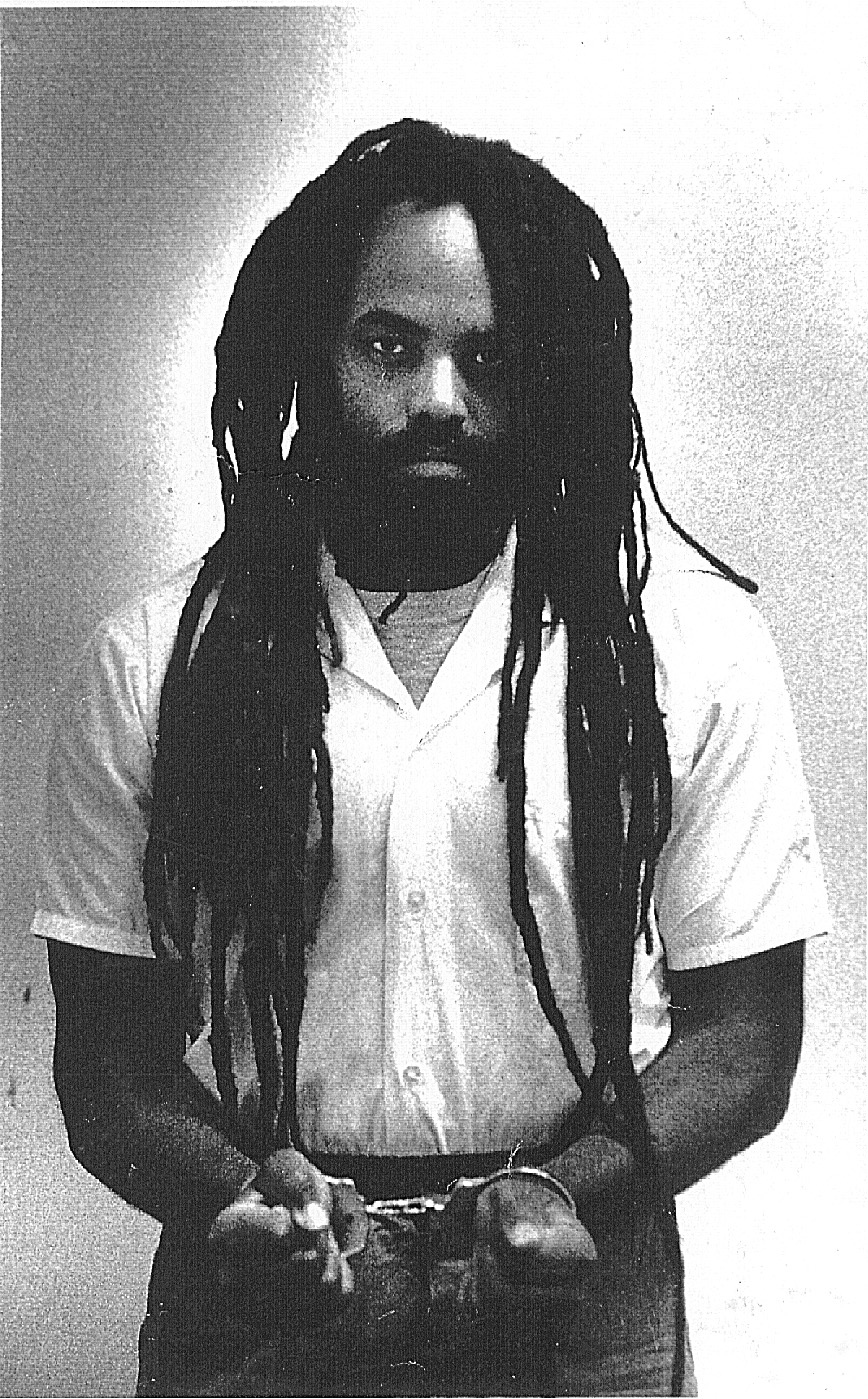
Sunday, February 1, 2009
A Tradition of Useless Debate
For decades, now, our presidential candidates have gotten on the stage with each other and dodged question after question by mocking the other guy's hair. What's the point? Why should we care? Shouldn't there be more incentive than chaple credit and bad pizza to watch what should be a deciding factor in who our nation's next leader will be?
My point is this: our debates need to change. I believe they should be strict in time, content, and topicality. At the amount of money spent on a presidential election, I would like to think we deserve more than a poor attempt at stand up preformed by old men.
What are your ideas for reforming our political debates? On a larger scale, what about our elections and the methods of communication within them?
Miss Teen South Carolina
So for those of you who haven't seen this video, you should definitely watch it:
http://www.youtube.com/watch?v=lj3iNxZ8Dww
Here we have an instance that demonstrates a tragic, yet humorous, failure to communicate. It is vitally important to be clear logical when communicating in any way, be it through a speech, an email, a text message, or even just a conversation. The process of translating thoughts into words and then having them translated back into a thought by another person whose brain, in essence, speaks its own language, is highly prone to errors.
Sometimes these errors do not produce a problem in comprehension, US Americans for example. Other times though, the meaning is completely obscured in the word vomit that ensues (I believe that our education like such as South Africa and, uh, the Iraq everywhere like, such as and...). This error can be compounded by the fact that the speaker may or may not have a clear enough idea of his thought to translate it into appropriate words. They may know just enough to be dangerous... Which I feel is probably the case with this post. It really is just an excuse to watch that video for class. :D
http://www.youtube.com/watch?v=lj3iNxZ8Dww
Here we have an instance that demonstrates a tragic, yet humorous, failure to communicate. It is vitally important to be clear logical when communicating in any way, be it through a speech, an email, a text message, or even just a conversation. The process of translating thoughts into words and then having them translated back into a thought by another person whose brain, in essence, speaks its own language, is highly prone to errors.
Sometimes these errors do not produce a problem in comprehension, US Americans for example. Other times though, the meaning is completely obscured in the word vomit that ensues (I believe that our education like such as South Africa and, uh, the Iraq everywhere like, such as and...). This error can be compounded by the fact that the speaker may or may not have a clear enough idea of his thought to translate it into appropriate words. They may know just enough to be dangerous... Which I feel is probably the case with this post. It really is just an excuse to watch that video for class. :D
Subscribe to:
Posts (Atom)